





Mapping for Climate Ready Cities - Dhaka Thrive
Climate Ready Cities • Bangladesh
Through our Mapping for Climate Ready Cities program, HOT is supporting the development of a thriving ecosystem focused on the creation, interpretation, and use of maps to respond to and reduce climate risks in urban areas across four priority regions. This project page highlights our work in Dhaka, Bangladesh through HOT's Open Mapping Hub - Asia-Pacific.
Climate Vulnerabilities in Dhaka
Dhaka is one of the fastest-growing megacities in the world. With rapid urbanization and growing migration, Dhaka confronts unique challenges in population density and the rapid expansion of informal settlements, resulting in makeshift communities and poor urban planning.
These areas are highly vulnerable to climate hazards like urban flooding, fires, disease outbreaks, and urban heatwaves. This is further compounded by poor housing and limited access to healthcare, WASH (water, sanitation, and hygiene), and waste management.
About Dhaka Thrive
To address these complex urban issues, HOT's Open Mapping Hub - Asia-Pacific (AP Hub) partnered with World Vision Bangladesh to launch Dhaka Thrive – an initiative focused on improving access and availability of open geospatial data in Dhaka’s informal settlements.
Implemented in 2024, the project centered on Mirpur, a densely populated area in North Dhaka with a high number of informal settlements and climate migrants.
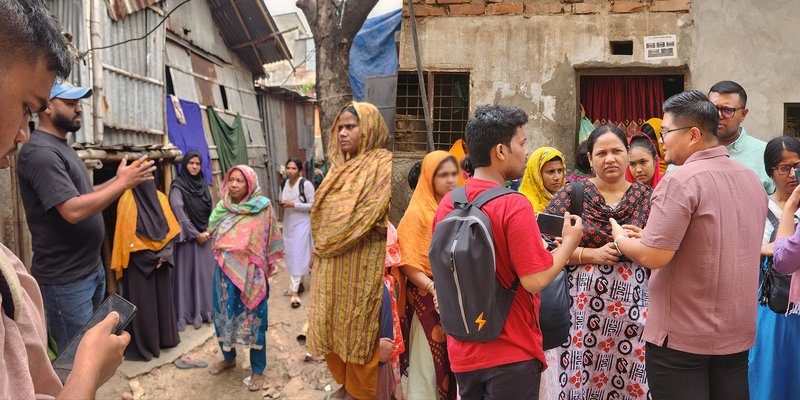
Field visit and data collection at Duaripara, Mirpur (March 2024) | Photo: Honey Fombuena / Open Mapping Hub - Asia-Pacific
By mapping critical features and establishing a comprehensive geospatial data, Dhaka Thrive provides deeper insights into the community’s needs and challenges, including climate risks and vulnerabilities, access to basic amenities, and patterns of settlement.
These insights enable governments, NGOs, humanitarian organizations, policymakers, and communities to make informed decisions, helping improve lives and address the urban challenges in Mirpur. They will also serve as a necessary foundation for better, more systematic urban planning in the future.
Our Mapping Approach
The project addressed data gaps with partners, local communities, and stakeholders through remote mapping and validation. This was followed by field data collection and mapping campaigns focused on informal settlements that are most vulnerable to climate risks.
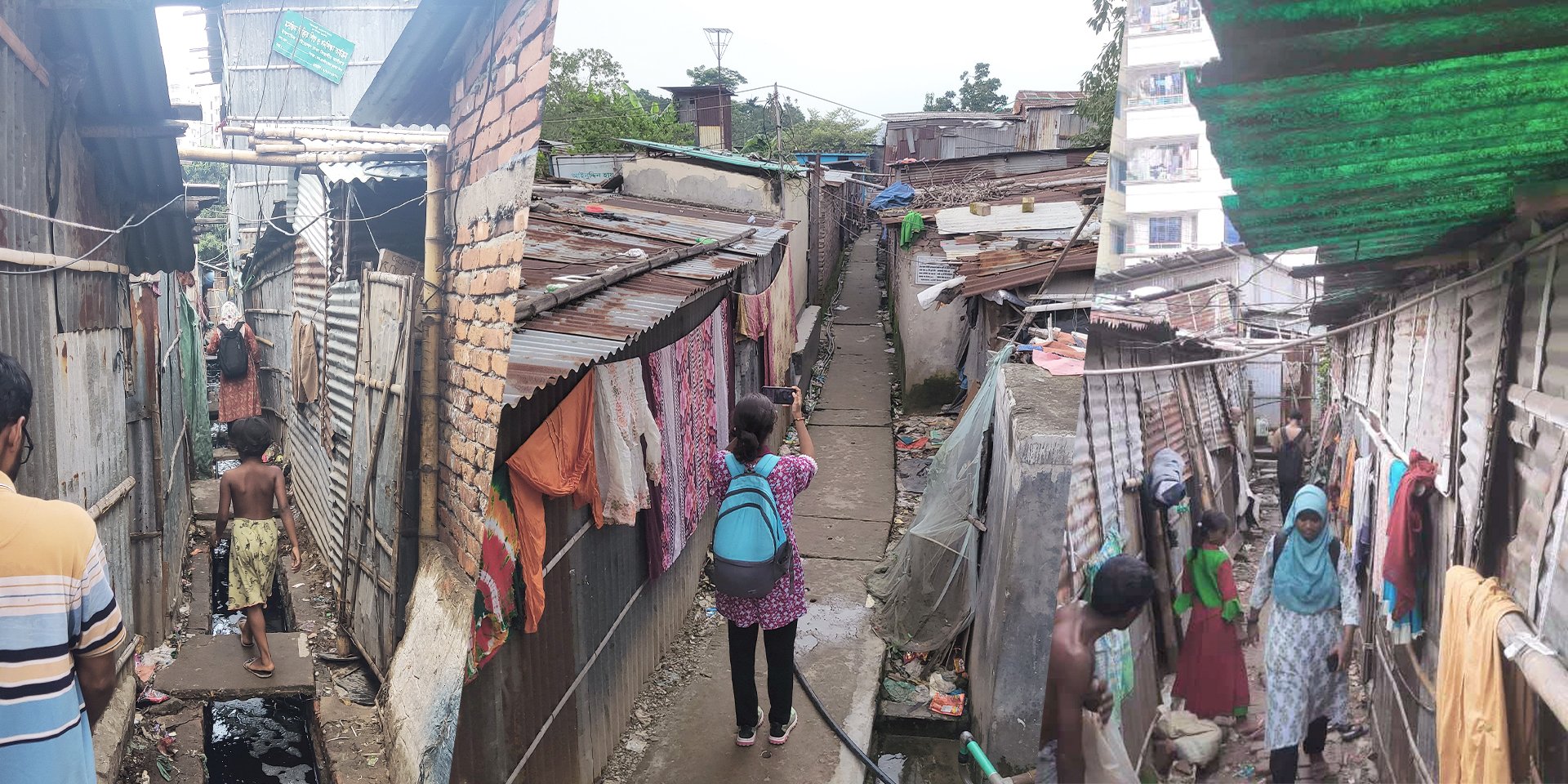
Field mappings conducted by local teams, mostly composed of youths (September 2024) | Photo: Dhaka Thrive field team
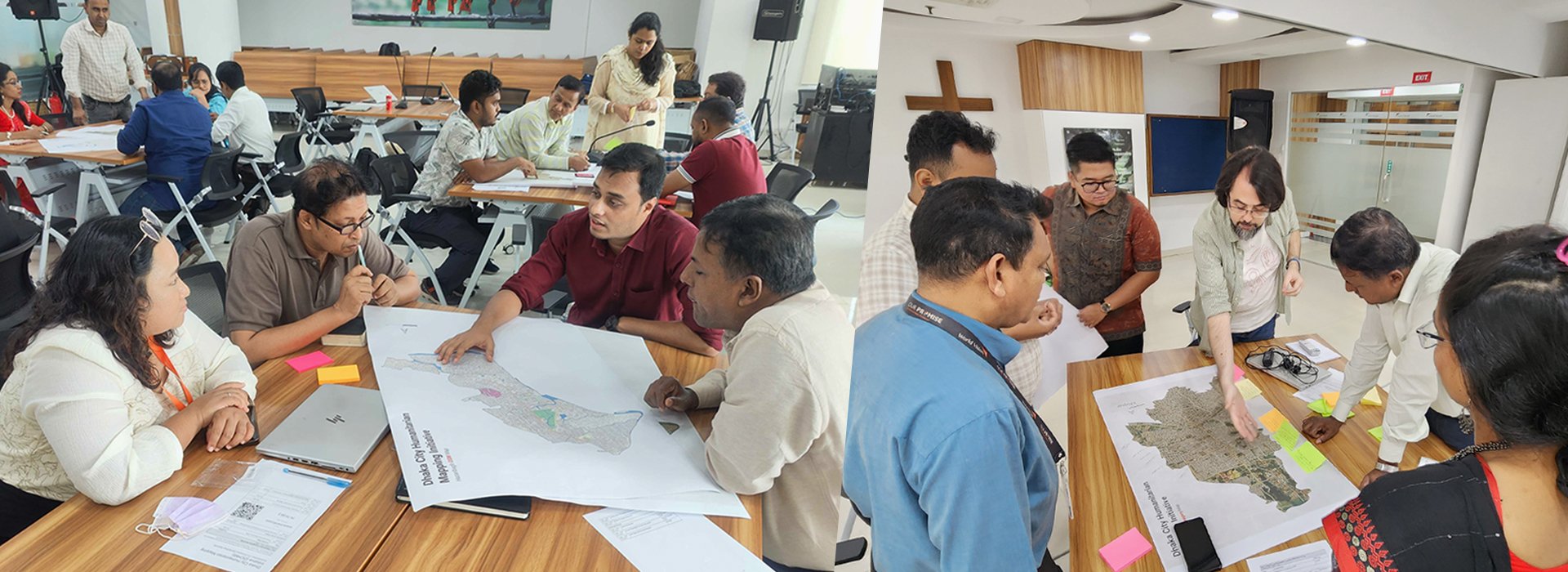
Prior to the mapping activities, in April 2024, a co-creation workshop was held with World Vision Bangladesh and local stakeholders to understand local needs and context. This workshop helped shape strategic direction and mapping priorities for the entire pilot phase of the project. | Photo: Can Ünen and Honey Fombuena / Open Mapping Hub - Asia-Pacific
At the field, in addition to collecting data, the teams actively engaged with community members to raise awareness about Dhaka Thrive, ensuring they are informed on how open data can benefit their communities.
The initiative also explored local data sources such as public datasets. The data collection and awareness-building efforts will then be supported by stakeholder training, workshops, and upskilling efforts focusing on data collection and data use for decision-making.
Project Outcomes
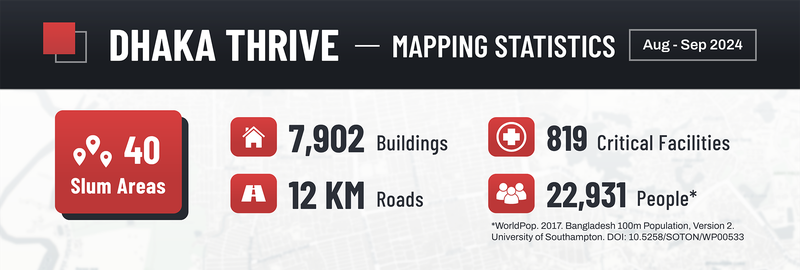
Here’s what Dhaka Thrive accomplished during its 2024 pilot phase:
- Mapped and validated critical urban infrastructure, including buildings, roads, and basic amenities.
- Developed a multi-hazard vulnerability assessment by integrating community-led data with remote sensing, enabling comprehensive understanding of local risks.
- Provided data-driven insights for policymakers and humanitarian organizations to design targeted resilience interventions.
Explore the Dhaka Thrive Dashboard
Dive into the project’s data through our interactive dashboard.
The dashboard showcases three primary datasets:
- Hazard points and layers – Areas with high climate hazard risks, including flood, dengue hotspots, and fire
- Critical lifeline facilities – Community centers, healthcare, educational institutions, places of worship, water, WASH, and waste management
- Slum boundaries – Detailed statistics for each 40 settlements, with a link to access the street-level imagery via Mapillary
Built using the open-source uMap tool, the strength of the Dhaka Thrive Dashboard lies in its seamless integration with OpenStreetMap (OSM). This allows data synchronization and real-time updates whenever local stakeholders contribute to or update data on OSM.
Learn more about the dashboard through this infographic.
Putting Underrepresented Communities on the Map
Through data collection and local engagement, Dhaka Thrive enriched existing maps of Mirpur’s informal settlements – areas that previously lacked detailed, up-to-date geospatial information. When communities are represented on the map, their needs and challenges become more visible, allowing more resource planning and inclusive decision-making.
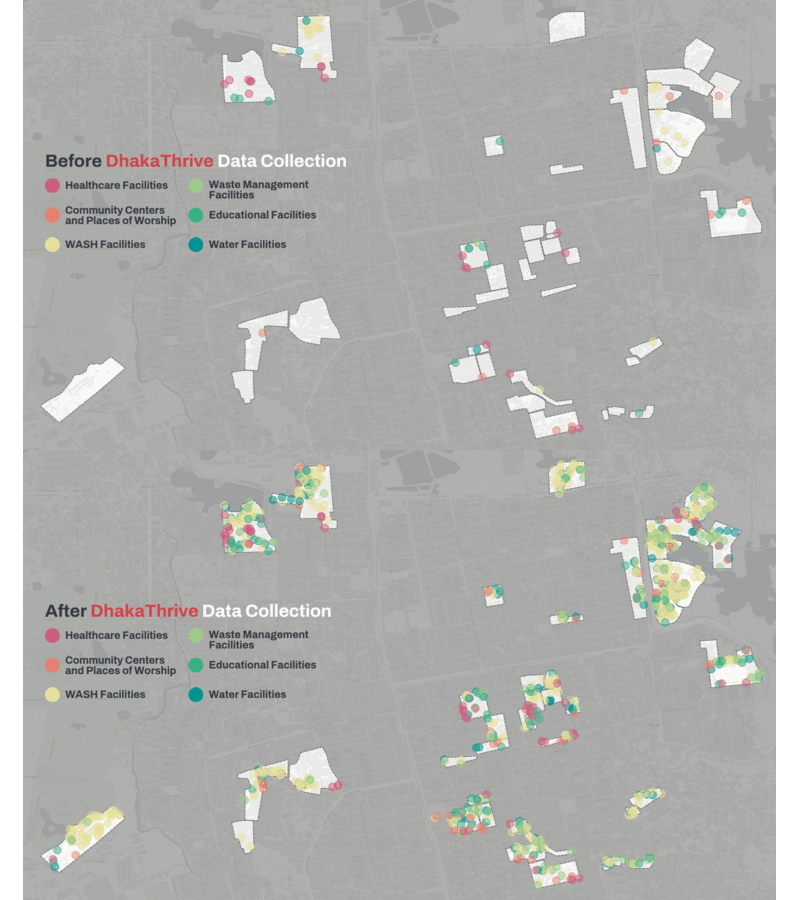
Critical facilities mapped in Mirpur before and after the Dhaka Thrive project's data collection | Map visualization: Honey Fombuena / Open Mapping Hub - Asia-Pacific
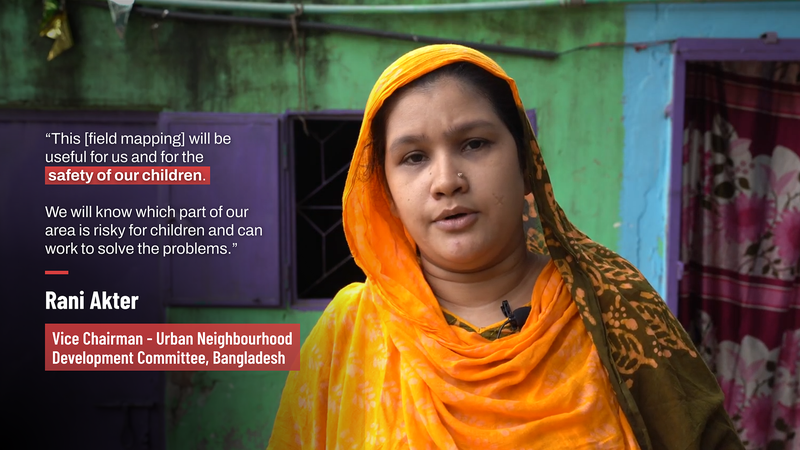
Rani Akter, Mirpur community member, shares her thoughts on the Dhaka Thrive project. | Photo: Dhaka Thrive video team
Additionally, the project empowered local youths by equipping them with digital skills in mapping and data analysis through direct involvement in data collection. This approach not only promoted sustainability but also contributed to the Bangladesh government’s vision of building a digital nation.

Members of World Vision Bangladesh, led by our Open Mapping Guru Brazil Singh, eagerly collected street-level images using Mapillary during a field visit to Mirpur. Read Brazil’s blog to gain insight into the fieldwork. | Photo: World Vision Bangladesh volunteer team
Key Takeaways
The Dhaka Thrive project exemplifies the power of open geospatial data in addressing climate change and urban challenges. By combining locally-led open data generation with data-driven insights, it is laying the groundwork for climate-resilient cities.
Having a centralized platform like the Dhaka Thrive Dashboard that any stakeholder can update is crucial to ensure that data is updated and reliable. This will create greater opportunities for data to be used effectively, contributing to meaningful and sustainable impact for all.
As Dhaka Thrive moves forward, the focus on empowering communities and decision-makers will drive sustainable urban development and improved living conditions for communities vulnerable to climate change, creating a lasting framework for stronger local urban resilience.

Dissemination workshop in Dhaka, Bangladesh to share output and findings from the project (November 2024). The workshop was attended by local stakeholders from government agencies, NGOs, and university representatives. | Photo: Arman Nahian
Next Steps
Building upon the work during this pilot phase, the team will collaborate with local stakeholders to evaluate findings and refine the project methodology to develop a tailored end-to-end model suited to Dhaka’s context. This involves:
- Sharing generated actionable insights with stakeholders through dissemination workshops and training on how to effectively use the data. These sessions will also serve as a platform to refine insights and explore opportunities to scale the project.
- Promoting continued data use and contribution.
- Enhancing community participation.
More from Dhaka Thrive: Stories, Videos, and Resources
1) Video - Data Collection and Community Story in Mirpur & Stakeholder Dissemination Workshop
2) Read our feature article in the Global Climate Watch.
3) Read and download our project report.
4) Explore photos from the project here.
Cover photo credit: Honey Fombuena / Open Mapping Hub - Asia-Pacific
Explore the project's next phase
Dhaka Thrive - Data-Driven Insights for Climate Resilience and Urban Development